Polish for people who didn’t grow up with it

From just smiling and nodding to actively joining in

Short, practical Polish and the customs behind it, for partners, family, and friends of Polish people, and anyone with Polish roots, wherever you live. We’re starting with Wigilia, the biggest night of a Polish Christmas.

  • No Polish needed
  • Free to start
  • Made for your phone
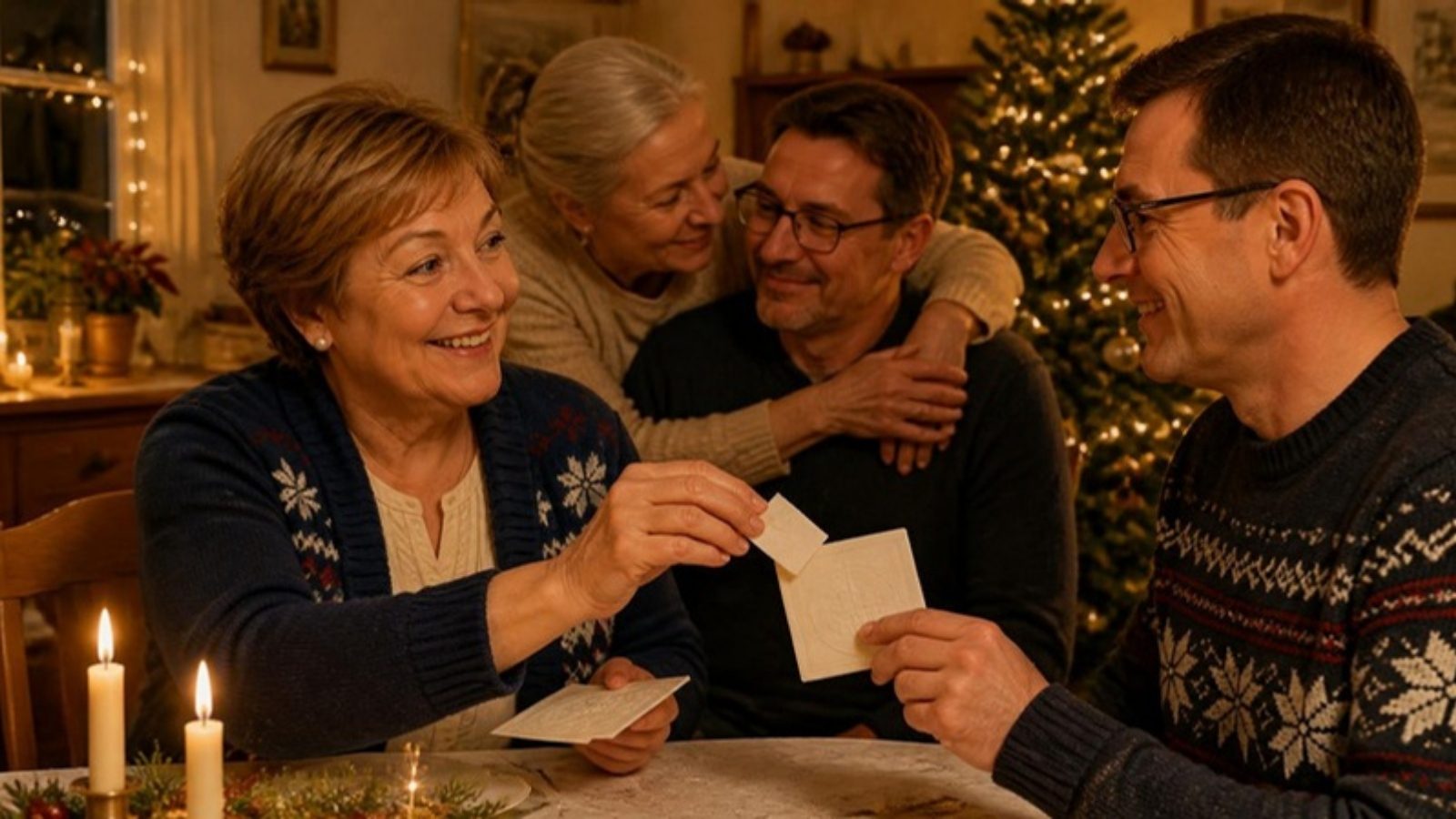
An older Polish woman in a red cardigan warmly shaking a guest’s hand by the Christmas tree, her family smiling beside her.

Wesołych Świąt!

veh-SOH-wikh SHVYONT

Merry Christmas!

This Christmas

Wigilia, sorted

Polish Christmas Eve: the first star, the opłatek wafer, twelve dishes, and a lot of family. Two steps get you ready: understand the night first, then join in, in Polish.

A girl at the window at dusk, watching for the first star, with the Wigilia table laid behind her.

Step 1 · Free

Wigilia Starter

Understand the night

  • What Wigilia is, and what happens on the night
  • How a Polish Christmas differs from a British one
  • Who’s who around the table, and what to call everyone
  • Your first Polish words, with audio

Free · about an hour, on your phone or computer

Start the free course
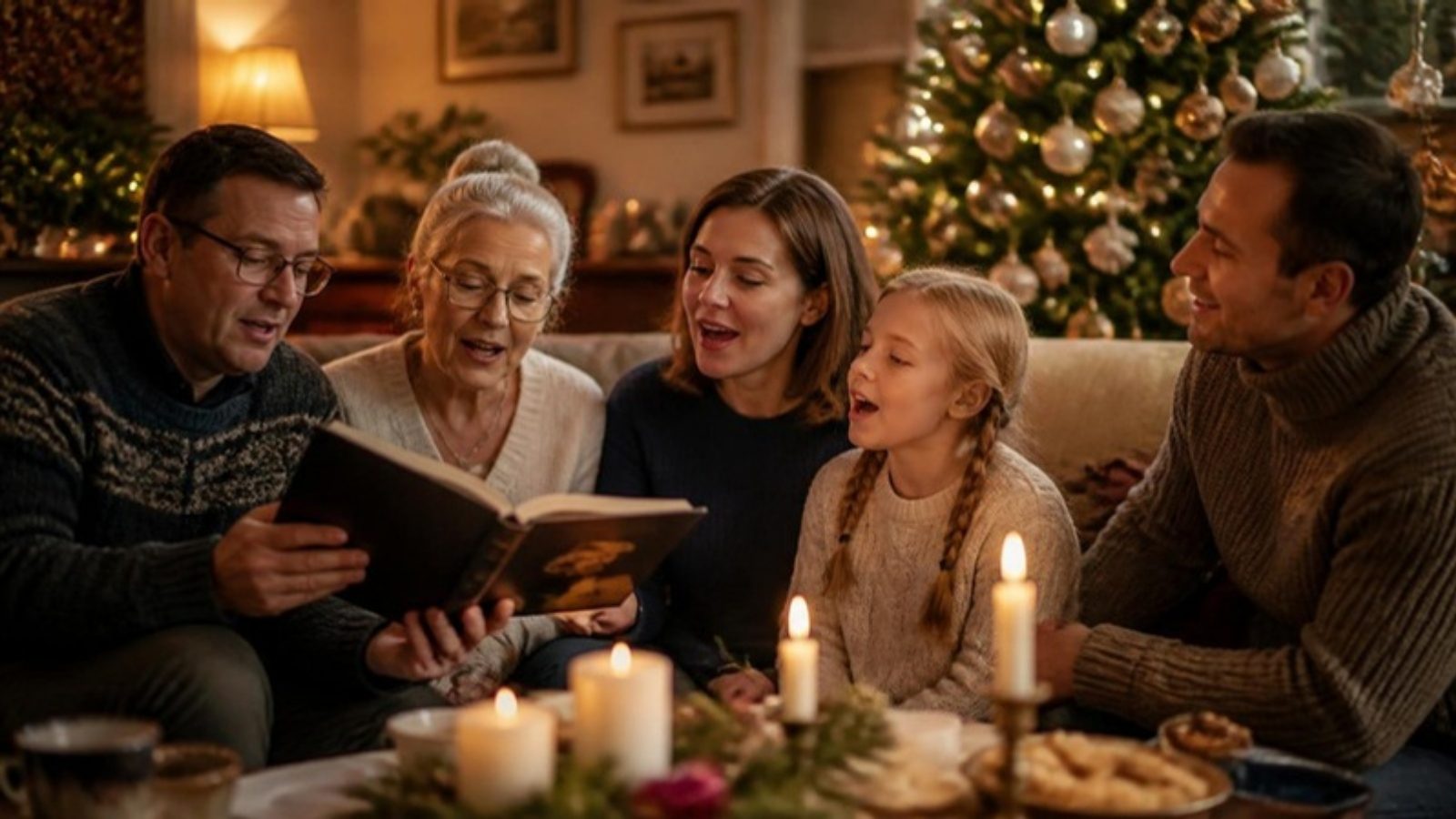
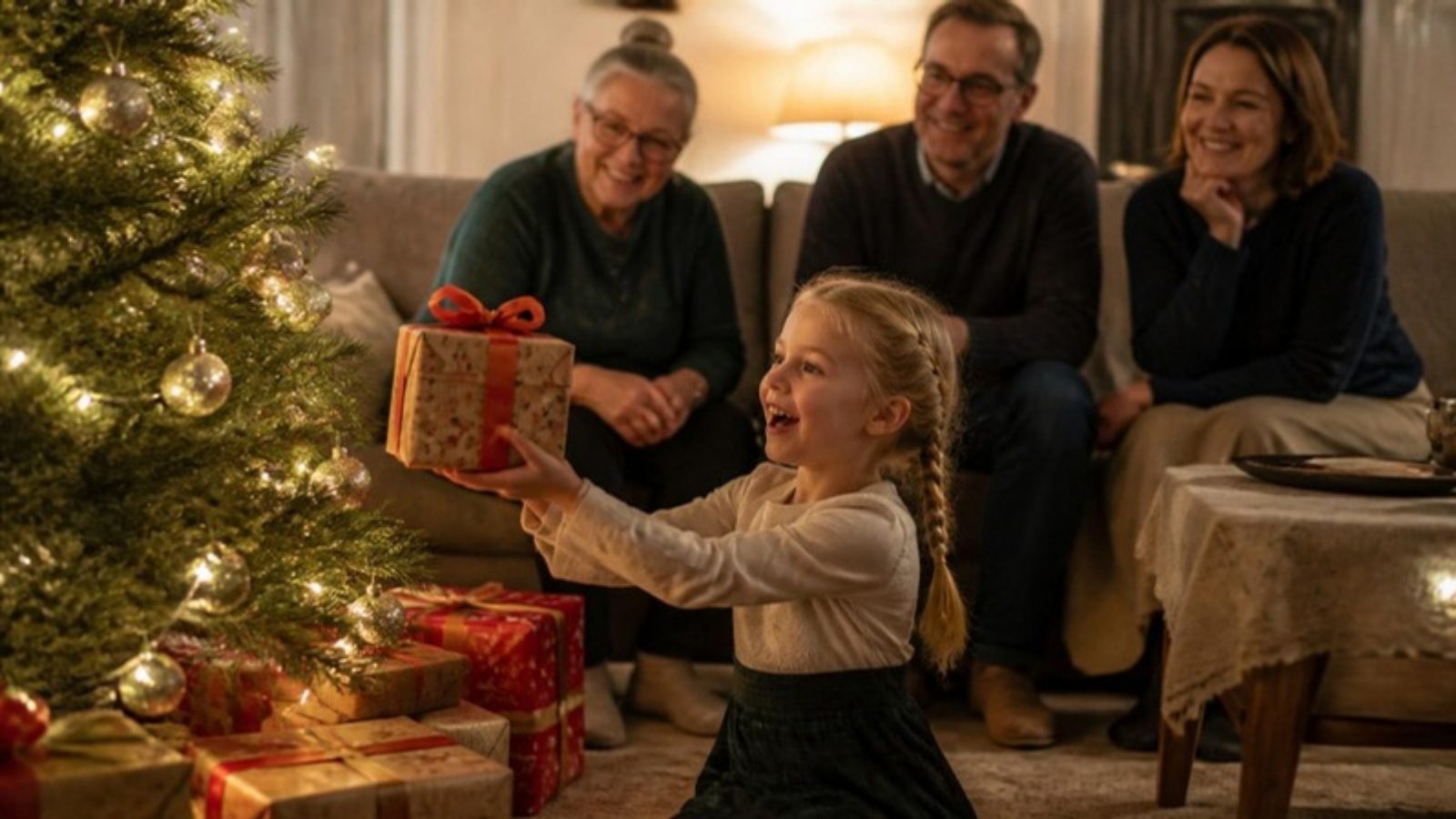
A family singing carols together by candlelight after the Wigilia supper.

Step 2 ·

Survive Wigilia

Join in, in Polish

  • What to say at every moment of the evening, from the doorstep to goodnight
  • What the family is likely to say to you, so you can follow along and answer
  • Practise every phrase before the night, with audio at normal speed or slowed down
  • A cheat sheet for the table, on your phone or printed

Open now

See what’s inside

How it works

Real moments, real Polish

The courses are built round real moments like these: what’s happening, what people say, and what’s expected of you. You hear the Polish, practise until it feels easy, find out what to do when it doesn’t go to plan, then say it when it counts.

How each lesson works

15 to 20 minutes, made for your phone. These are real screens from the courses.

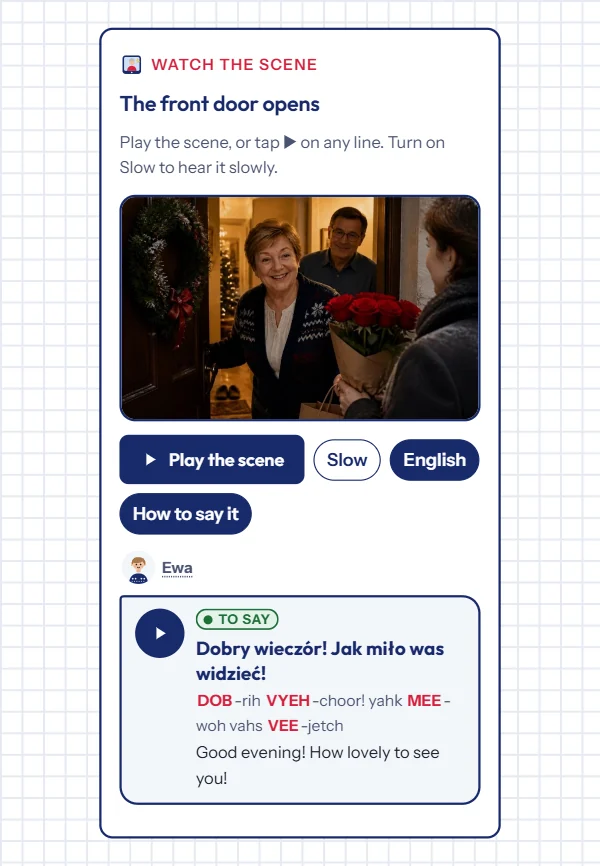
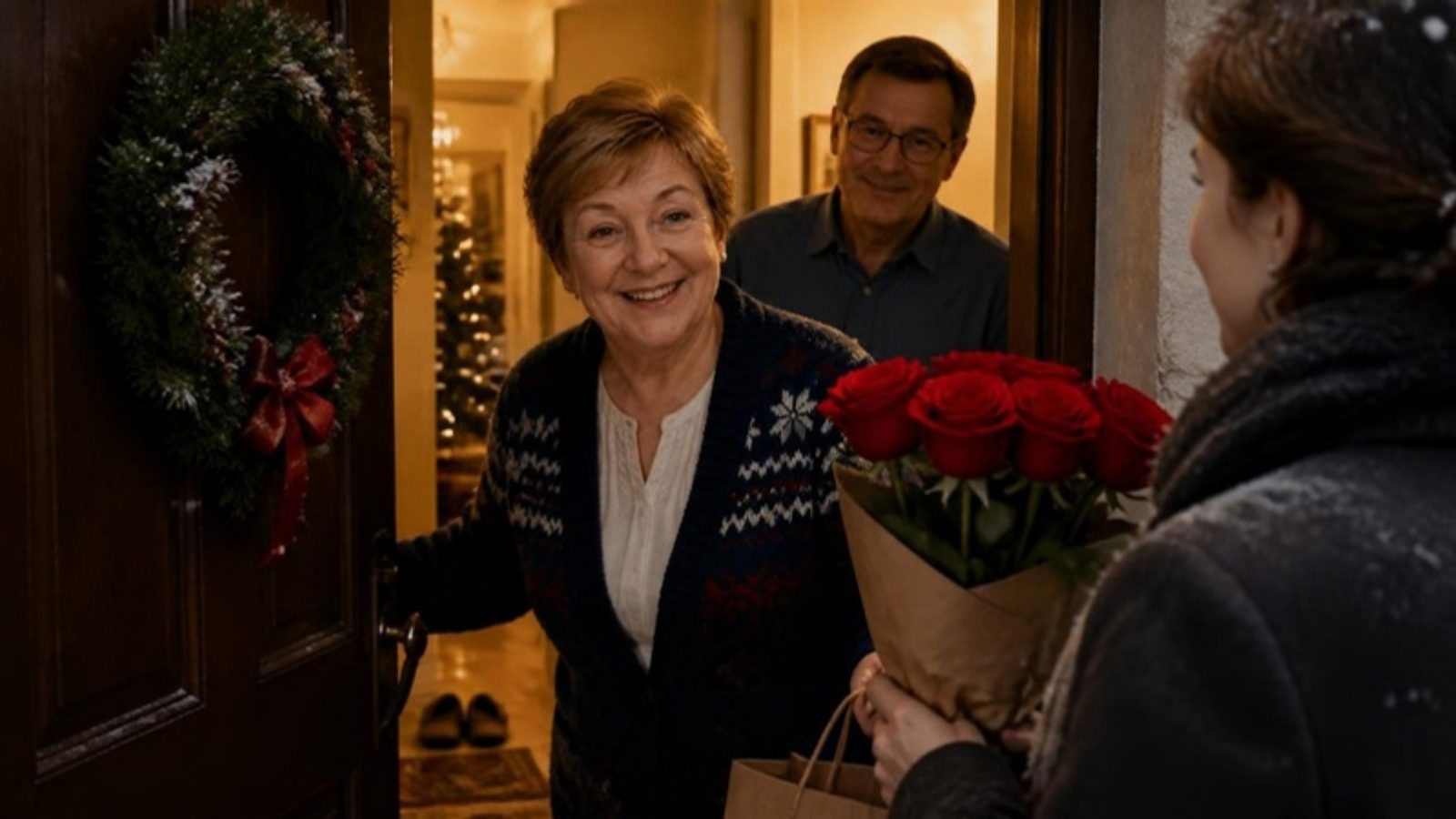
  1. A lesson scene: Ewa opening her front door to a guest with red roses, with Play the scene, Slow, English, and How to say it buttons.

    1 Watch the moment

    Each lesson opens on a scene from the night. Play it, slow it down, and turn on the English or how to say it when you want them.

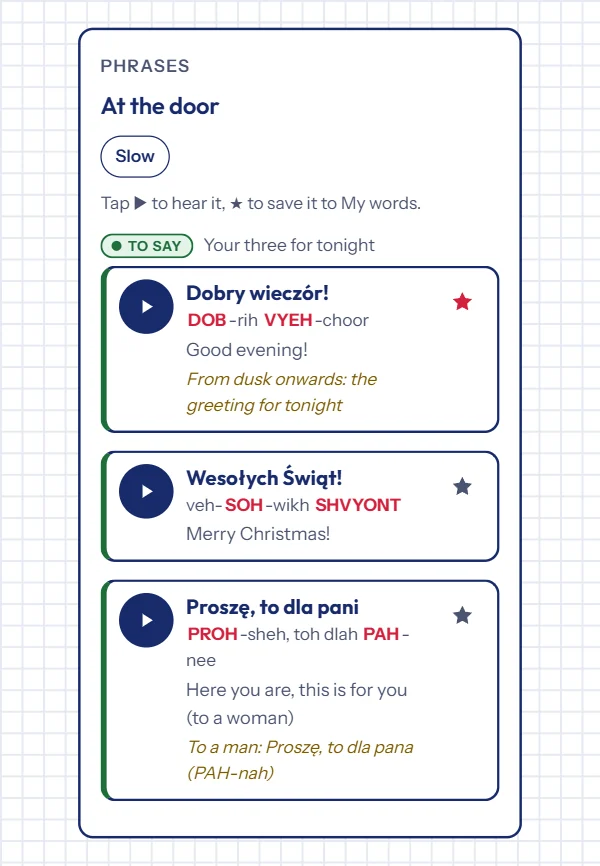
  2. The lesson’s phrases: Dobry wieczór!, Wesołych Świąt!, and Proszę, to dla pani, each with a play button, how to say it, and the English.

    2 Hear it

    Your phrases for that moment, recorded at normal speed or slowed down, with the stressed part marked so you can copy it.

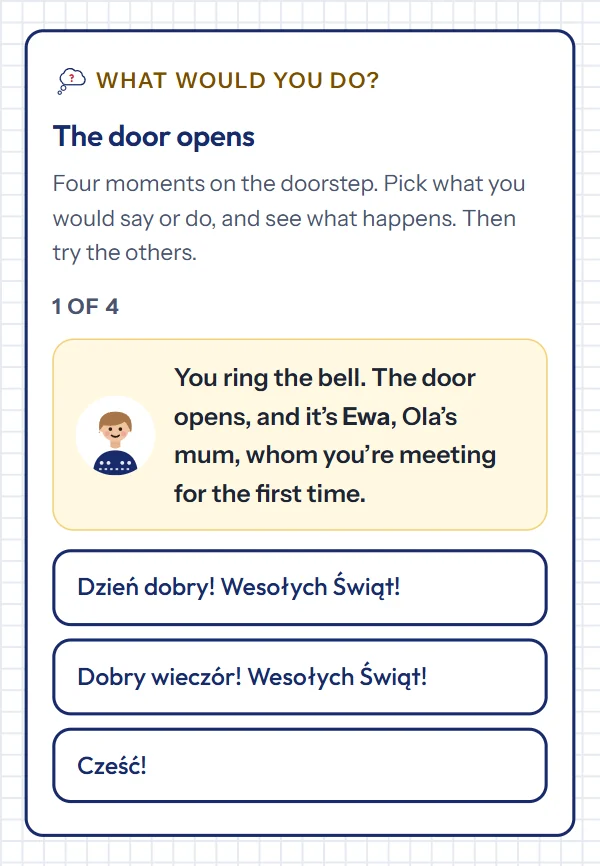
  3. What would you do? The door opens and it’s Ewa, whom you’re meeting for the first time. Three greetings to choose from.

    3 Practise it

    Short games with feedback that explains. Pick what you’d say, see how it lands, and learn how to rescue it if it doesn’t.

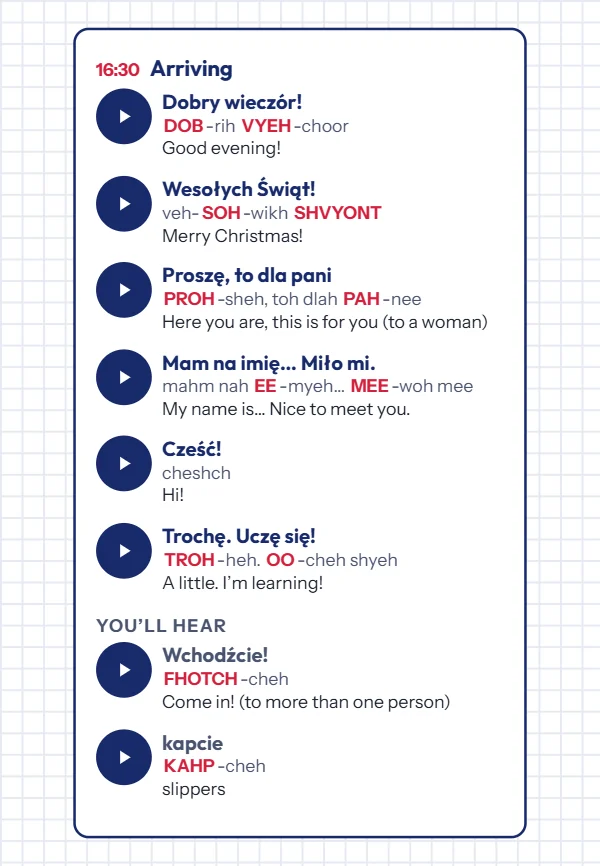
  4. The cheat sheet: 16:30 Arriving, with Dobry wieczór!, Wesołych Świąt!, and more, each with how to say it, then two phrases you’ll hear.

    4 Say it on the night

    A cheat sheet in the order of the evening. Print it, or save it to your phone in case there’s no signal at the table.

a few new phrases at a time, practice before every check, and the customs explained alongside the words, so you know what to say and why you’re saying it.

Try one now

Find your Polish name

Type a first name and see what a Polish family might call you: the everyday name, the fond one, and the one they’d call across the house.

No sign-up, nothing saved. Just a taste of the free course.

Try:

Everything that comes with it

Made by someone who married into a Polish family and designs courses for a living. About us

Read before the big night

The Journal
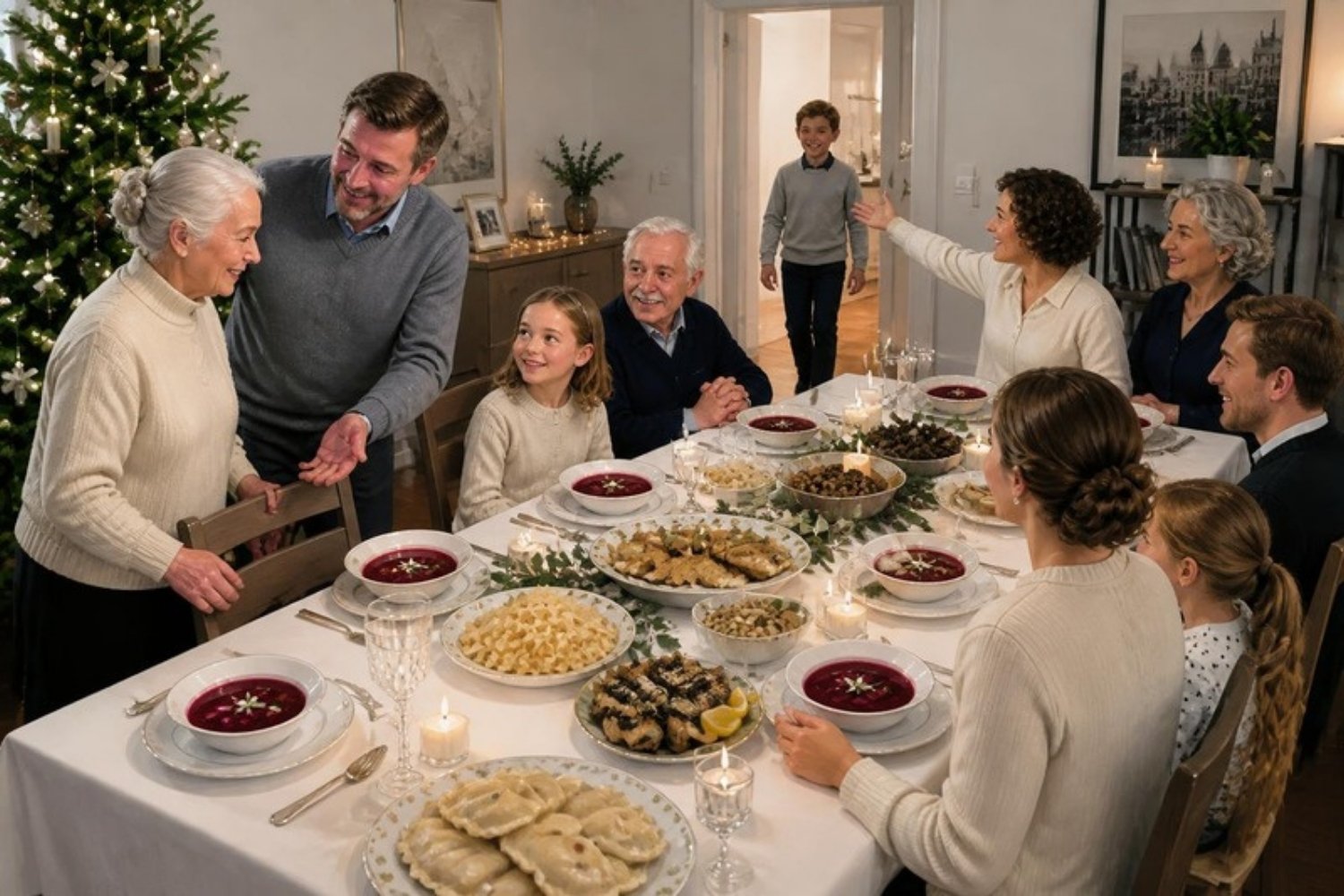
A family laughing together at the Wigilia table.

First Wigilia coming up?

Start with Step 1. It’s free, it takes about an hour, and you’ll walk in knowing what’s going on, and who everyone is.

Start the free course